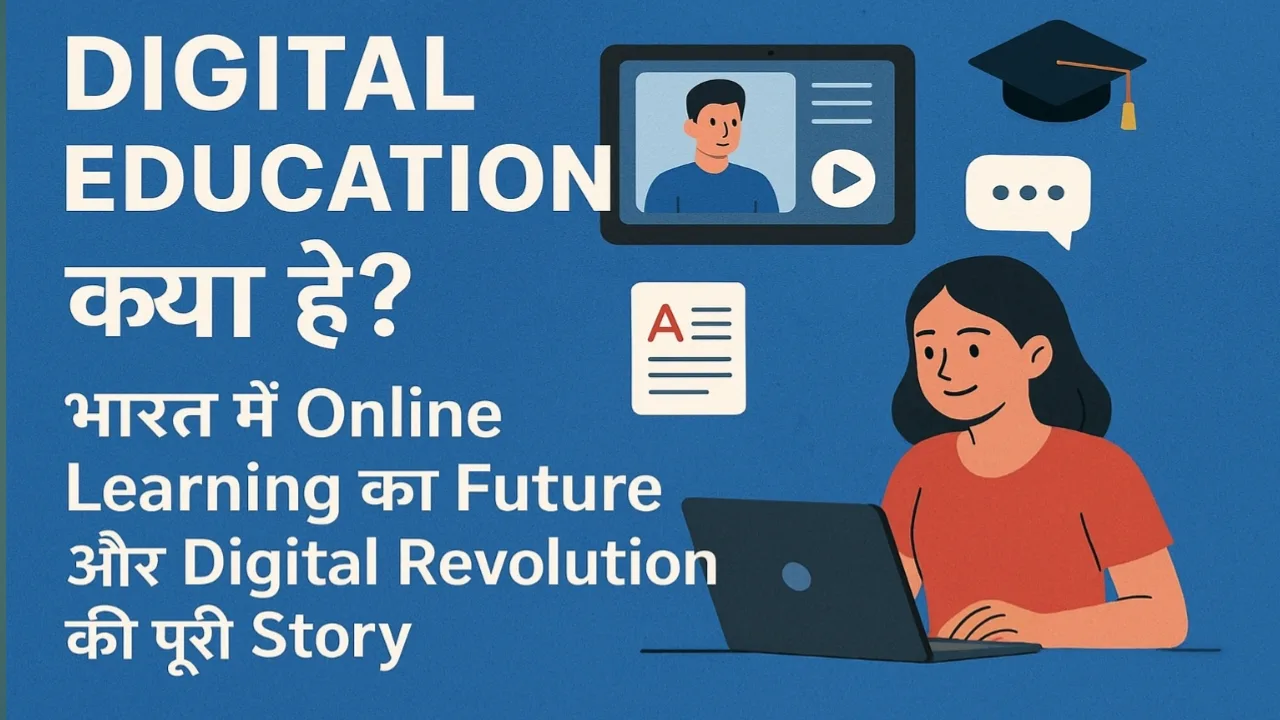
Digital Education in India आज की दुनिया में online learning कैसे काम कर रही है, इंडिया में कौन-से platforms आगे हैं, क्या फायदे-नुकसान हैं और आने वाले सालों में शिक्षा कैसी दिखेगी — आसान भाषा में, practical examples और SEO-friendly tips के साथ।
Introduction Digital Education का मतलब और क्यों यह ज़रूरी है?
Digital Education, या डिजिटल एजुकेशन, का मतलब है टेक्नोलॉजी का इस्तेमाल करके पढ़ाई-लिखाई करना — चाहे वह video lectures हों, live classes हों, mobile apps हों या पूरी तरह self-paced online courses हों। India में पिछले कुछ सालों में यह तेजी से बढ़ा है — COVID-19 pandemic ने acceleration को और तेज कर दिया और अब schools, colleges और professional learners सभी digital tools use कर रहे हैं।
Digital Education क्या है? — Short Definition
Digital Education = Education delivered or enhanced through digital tools & technology. इसमें शामिल हैं:
Online classes (live / recorded)
Learning Management Systems (LMS)
Mobile learning apps
Virtual labs, AR/VR learning
MOOCs (Massive Open Online Courses)
Assessments & adaptive learning platforms
Simple example जब आप YouTube पर किसी topic का lecture देखते हैं या Coursera/edX पर certification करते हैं — ये सब digital education का हिस्सा हैं।
Types of Online Learning — कौन-कौन से मॉडल हैं?
1. Synchronous Learning (Live Classes)
Live Zoom/Google Meet classes जहां teacher और students same समय पर interact करते हैं। classroom-like feel देता है।
2. Asynchronous Learning (Self-Paced)
Pre-recorded videos, readings, quizzes — learner अपने समय पर पढ़ता है। Flexibility ज़्यादा, self-discipline चाहिए।
3. Blended / Hybrid Learning
Offline और online का mix — Campus classes + online resources। आज यह सबसे popular model बन रहा है, खासकर higher education में।
4. Microlearning
Short modules — 5–15 मिनट के video या quizzes। Mobile उपयोगकर्ता के लिए perfect।
5. Adaptive & Personalized Learning
AI का इस्तेमाल करके learner के performance के हिसाब से course adapt हो जाता है — weaknesses पर extra practice मिलता है।
India में Digital Education — Past, Present & Current Trends
Past (Before 2015)
पहले basic e-learning attempts थे CD-ROMs, educational TV channels, कुछ private coaching websites। इंटरनेट penetration और smartphone use कम था।
Present (2020s)
अब scenario बदल चुका है — affordable smartphones, cheap data plans (Jio effect), और multiple Indian edtech startups (Byju’s, Unacademy, Vedantu, upGrad, Simplilearn, etc.) ने market को reshape किया। Schools को भी hybrid मॉडल अपनाना पड़ा।
Key Trends
Localized content (Hindi, regional languages)
Skill-based short courses & certifications
AI-driven assessments and proctoring
Edtech investment and VC funding
Integration of vocational & employability skills
Advantages — Digital Education के फायदें
1. Accessibility & Reach
Remote areas तक भी learning पहुँच सकती है। Students को top teachers के lectures घर बैठे मिल जाते हैं।
2. Flexibility & Personalized Pace
Students अपनी speed पर पढ़ सकते हैं, repeat कर सकते हैं और अपनी convenience के हिसाब से सीख सकते हैं।
3. Cost-Effectiveness
Traditional coaching या physical classroom की तुलना में कुछ courses काफी सस्ते होते हैं, खासकर MOOCs और recorded lectures।
4. Skill-Focused Learning
Professional skills जैसे coding, data analysis, digital marketing short courses से जल्दी सीखा जा सकता है और jobs के लिए direct prepare किया जा सकता है।
5. Technology-Enabled Tools
Interactive quizzes, simulations, virtual labs और analytics से learning effective बनती है।
Challenges — डिजिटल एजुकेशन की बड़ी चुनौतियाँ
1. Digital Divide (Connectivity & Devices)
हर विद्यार्थी के पास smartphone या reliable इंटरनेट नहीं है — rural-urban gap अभी भी बड़ा है।
2. Quality & Regulation
कुछ courses low quality होते हैं; certification की credibility variable है। Quality control और regulation की ज़रूरत है।
3. Student Engagement
Self-paced learning में engagement और completion rates अक्सर low रहते हैं। Microlearning और mentorship इससे मदद कर सकते हैं।
4. Teacher Training
Teachers को digital pedagogy में train करना ज़रूरी है — सिर्फ Zoom करना ही पर्याप्त नहीं है।
5. Assessment & Cheating
Online exams में cheating concern रहता है — proctoring और secure assessments के साथ solve करना होगा।
Government Initiatives in India — सरकारी पहल
India सरकार ने Digital Education को boost करने के लिए कई कदम उठाये हैं — कुछ प्रमुख पहलें
DIKSHA — Teacher training और school content के लिए national platform.
SWAYAM — MOOCs और higher education courses के लिए central platform.
e-Pathshala — NCERT content digital format में उपलब्ध.
PM eVIDYA, National Digital Infrastructure और state level edtech collaborations.
इन पहलों का मकसद है content accessibility बढ़ाना और teachers को support देना।
Top EdTech Platforms & Use Cases (India)
कुछ popular Indian और global platforms जिनका इस्तेमाल learners करते हैं:
Toppr, Khan Academy (global but regional content), WhiteHat Jr — niche areas
NIOS digital resources, government portals like SWAYAM
Use case example: A student preparing for JEE may use a mix of live doubt sessions (Vedantu), recorded topic lectures (Byju’s), and mock tests (platform specific) — यह blended approach है।
Case Study कैसे एक Tier-2 छात्र ने online learning से advantage लिया
Background अजिंक्य (fictitious) — एक छोटे शहर का छात्र; coaching expensive और city में नहीं था।
Approach उसने free YouTube lectures + affordable subscription to a coaching app लिया। Daily microlearning, weekly mock tests और monthly mentorship calls से उसकी scores improve हुए।
Result Ajinkya cleared state level entrance और दूसरे शहर के कॉलेज में seat मिली।
भारत में डिजिटल एजुकेशन का विस्तार — ऑनलाइन लर्निंग से बदल रहा है शिक्षा का भविष्य।
Practical Tips Students & Parents के लिए
Students
Set a weekly study schedule — consistent रहिए।
Break study into micro sessions — 25–40 minute blocks (Pomodoro technique)।
Use quizzes to test retention — active recall effective है।
Balance screen time — regular breaks और offline practice करें।
Parents
Choose reputed platforms; free trial लें और content check करें।
Ensure device और basic internet access; monitor but don’t micromanage।
Encourage project-based learning और practical applications।
Digital Education in India सिर्फ एक trend नहीं — यह education ecosystem में fundamental shift है। सही mix of technology, pedagogy और policy से यह equitable और high-quality education deliver कर सकता है। Learners, teachers और policymakers — तीनों की role महत्वपूर्ण है।